Hygiene, Sealing, and Engineering Quality in Operating Room Doors: The Contribution of Manufacturing and Assembly Processes to Operational Effectiveness
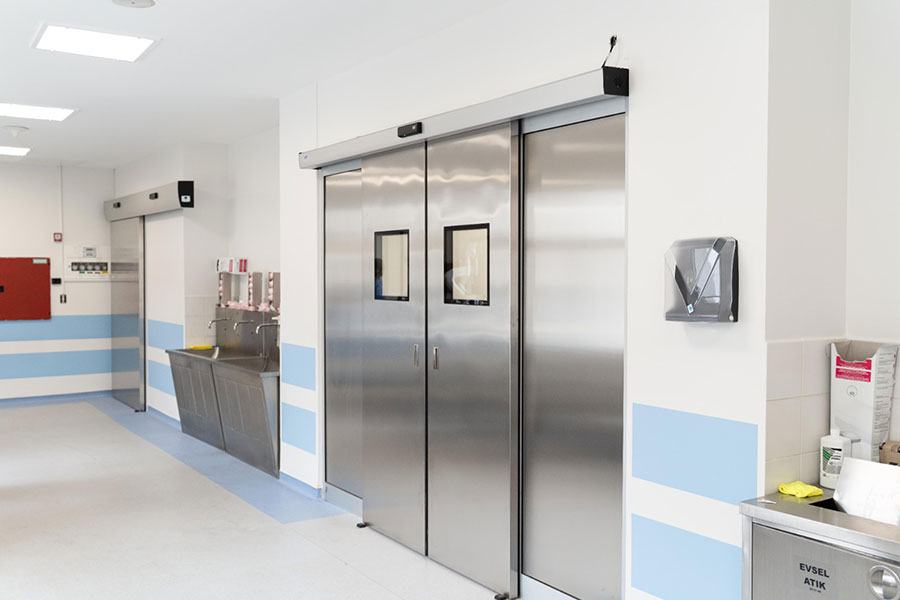
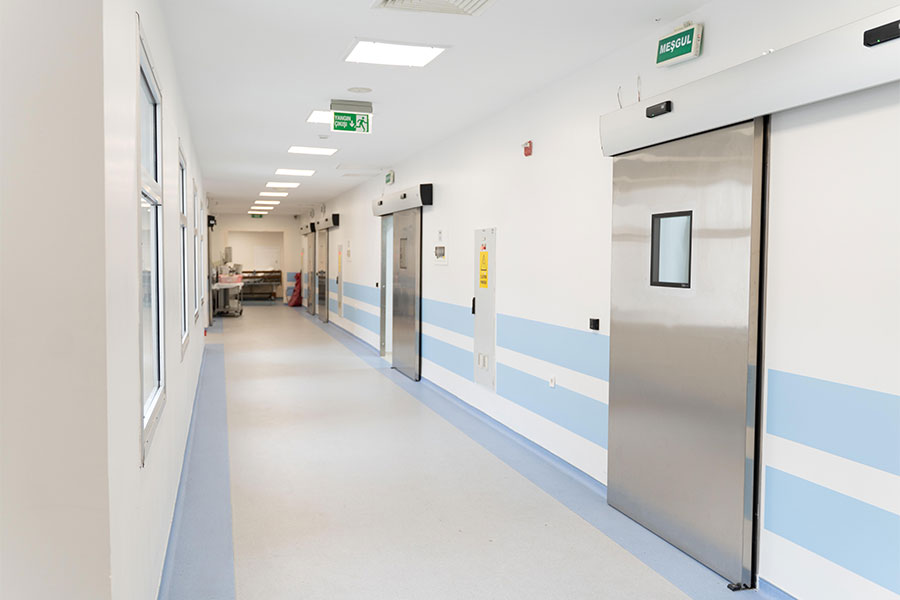
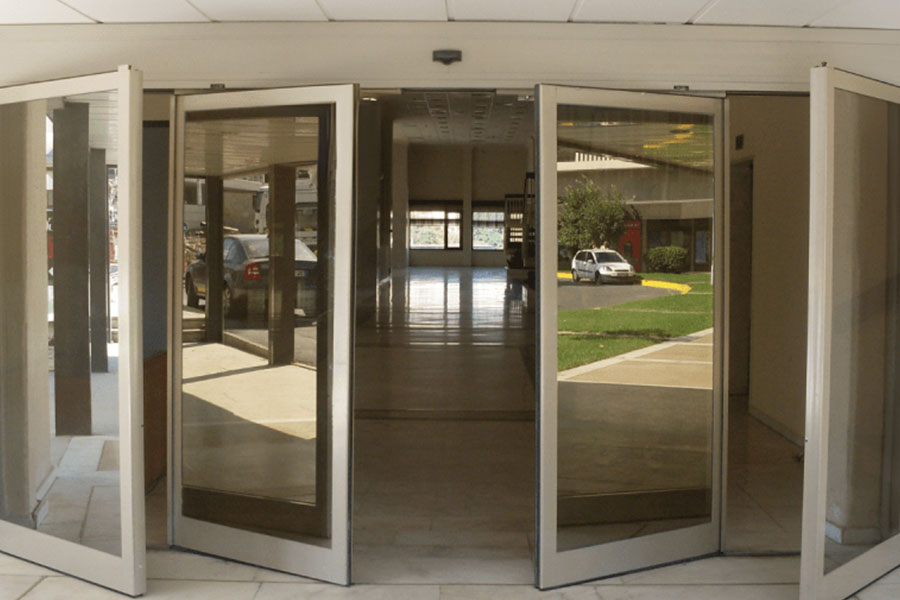
Operating rooms are the areas of healthcare facilities that require the highest level of precision. The operating room doors used in these areas are not just entrance elements; they are technical components that play a critical role in managing air quality, sterilization, pressure balance, and personnel flow. The door's design, material structure, automation system, and installation accuracy have a direct impact on patient safety and operational continuity.
Therefore, the performance of operating room doors depends on engineering quality, sealing levels, hygiene standards, and correct installation practices, independent of the general architectural design.
Technical Scope of Hygiene Requirements in Operating Room Doors
Hygiene is a decisive criterion for door systems, just as it is for all equipment in operating rooms. The door's surface structure, the materials used, and non-contact operating mechanisms must be designed to reduce the risk of infection.
Antibacterial and Chemical-Resistant Surfaces
Most cleaners used in medical environments have a high chemical impact. Therefore, the materials used on door surfaces must possess the following characteristics:
- Antibacterial surface technology: Surface structures that inhibit bacterial growth.
- Chemical resistance: Durability against the long-term use of operating room cleaning agents.
- Non-porous structure: Particle-free, easy-to-clean surfaces.
- Homogeneous coating: Provides hygienic flow control rather than mere aesthetics in sterile areas.
Non-Contact Usage Technologies
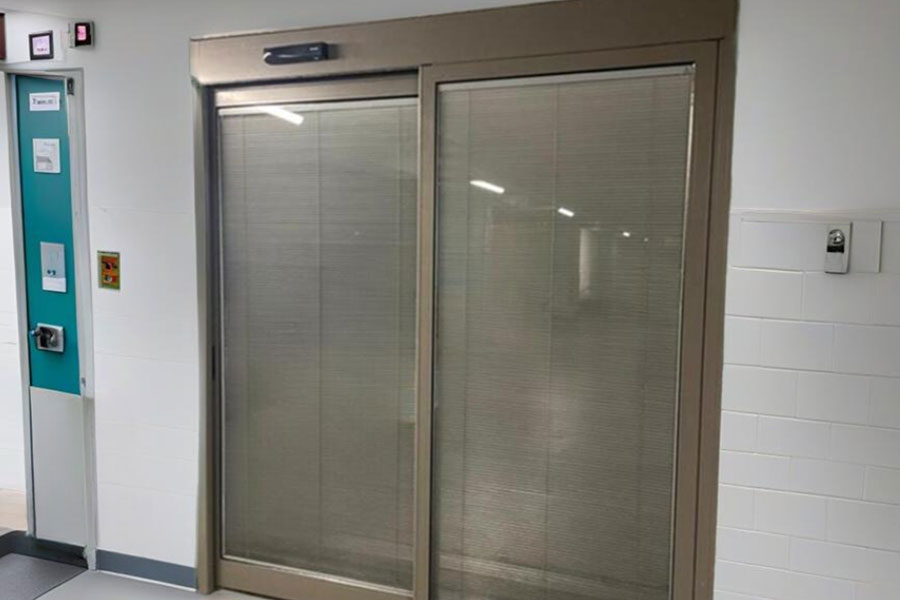
To minimize hand contact in operating rooms, automatic or photocell door mechanisms are preferred. These systems:
- Reduce infection risk by eliminating contact,
- Ensure rapid passage during busy operation hours,
- Make door movement controlled.
The sensitivity and calibration of sensor technologies are direct determinants of the door's operational efficiency.
Sealing and Pressure Management in Operating Room Doors
Sealing performance is one of the most critical technical requirements for operating room doors. By creating positive pressure in operating rooms, the goal is to prevent particle entry from the outside environment. The more airtight the door, the more stable the pressure balance remains.
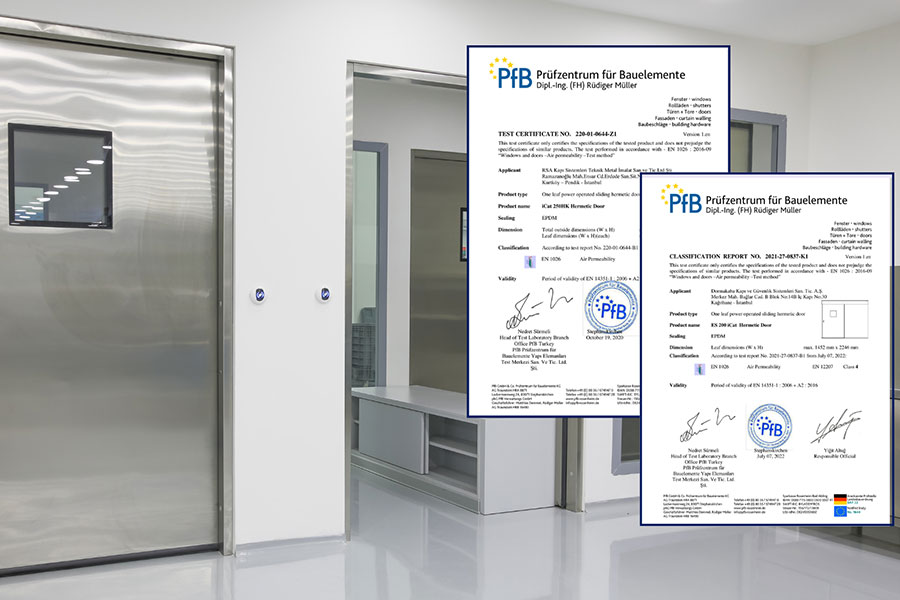
Technical Standards Determining Sealing Performance
- EN 12207 – Air permeability classes for doors,
- EN 16361 – Power-operated pedestrian doors – Product standard, performance characteristics,
- ISO 14644 – Cleanroom compatibility requirements.
Operating room doors should reach at least Class 3 or Class 4 air tightness levels. Doors falling below these classes are not considered sufficient for sterile area protection.
The Impact of Door Leaf and Frame Structure on Sealing
For high sealing performance, the door leaf must fit perfectly into the frame and create a peripheral barrier when closed. The following technical elements are decisive at this point:
- Specially designed sealing gaskets,
- Door leaf weight optimized against pressure,
- Recessed mechanism design,
- Closing the bottom and top contact lines with minimum clearance.
Technical Impact of Production Quality on Door Performance
Unlike standard doors, operating room doors are systems that must be tested in medical processes and manufactured in compliance with sterile area conditions.
Mandatory Quality Controls in Production
A high-quality operating room door must pass the following tests during the production stage:
- Air tightness tests,
- Leaf-to-frame fit tolerance measurements,
- Cycle tests for motor and rail systems (high-usage scenarios),
- Electrical safety tests,
- Surface material hygiene compatibility tests.
The Role of Mechanical Stability in Production
The mechanical stability of operating room doors depends particularly on the weight distribution of the door leaf and the accuracy of the sliding mechanism. Therefore:
- Leaf core filling material must be selected according to engineering calculations,
- Body rigidity must be at the maximum level,
- Resistance against deformation risk under load must be increased.
The Impact of Professional Installation on Operational Performance
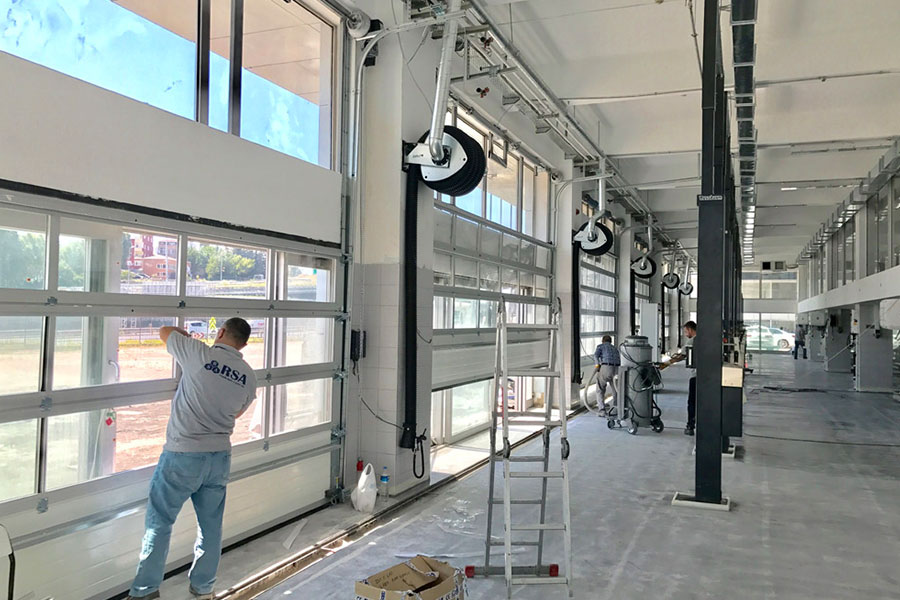
The ultimate performance of operating room doors depends on installation accuracy as much as production quality. Even a top-tier manufactured door cannot reach its true performance potential due to incorrect installation.
Critical Engineering Steps in the Installation Process
- Millimetric adjustment of the frame installation plane: The fundamental condition for sealing performance.
- Routing pipe and cable lines according to sterile area rules: Maintains hygiene integrity.
- Optimizing automation settings according to operational intensity: Determines speed, safety, and comfort expectations.
- Applying sealing gaskets with the correct compression force: Supports positive pressure management.
Technical Criteria for Choosing the Right Door System for Healthcare Facilities
For building owners, technical teams, and project managers, choosing an operating room door is part of long-term operational safety. Therefore, the following technical criteria should be evaluated in the selection:
- Sealing class – EN 12207 compliance,
- Hygiene surface quality – antibacterial and chemical resistance,
- Stability of automation technology,
- Manufacturer’s expertise in medical doors,
- Technical service capacity after installation,
- On-site maintenance and calibration services.
Conclusion: Performance is Achieved Through Engineering Quality and Correct Application
Operating room doors perform based on multi-faceted engineering criteria such as hygiene, sealing, pressure balance, automation safety, and installation accuracy. Therefore, the quality of application is as critical as the quality of the product.

In operating rooms requiring high hygiene and sealing, correctly manufactured and professionally installed door systems are indispensable for patient safety, operational continuity, and building performance.
Latest Posts
-
Security, Stability, and Comfort in Revolving Doors: The Indispensable Entrance Technology for Modern Buildings25 Aralık 2025 -
Performance Enhancement in Industrial Factory Doors: The Technical Importance of Sectional Doors, High-Speed PVC Doors, and Integrated Solutions for Loading Systems25 Aralık 2025 -
Excellence for Cleanroom Doors: Manufacturing Technologies, Application Methods, and Ensuring High Standards.25 Aralık 2025 -
Automated Door Systems: Comfort, Efficiency and Technology in Modern Buildings14 Ekim 2025 -
Hermetic Doors: 7 Key Features to Consider for Industrial and Medical Applications27 Eylül 2025 -
The Modern Appeal of Sectional Doors15 Ocak 2025 -
The Station Nightclub Fire: Importance of Breakout Door Usage10 Ocak 2025 -
How Anti-Panic Doors Are Transforming Safety in Public Spaces?04 Ocak 2025
Performance Enhancement in Industrial Factory Doors: The Technical Importance of Sectional Doors, High-Speed PVC Doors, and Integrated Solutions for Loading Systems
Excellence for Cleanroom Doors: Manufacturing Technologies, Application Methods, and Ensuring High Standards.
Automated Door Systems: Comfort, Efficiency and Technology in Modern Buildings
Hermetic Doors: 7 Key Features to Consider for Industrial and Medical Applications
The Impact of Automatic Doors on Customer Experience in the Retail Sector