Excellence for Cleanroom Doors: Manufacturing Technologies, Application Methods, and Ensuring High Standards.

Excellence for Cleanroom Doors: Manufacturing Technologies, Application Methods, and Ensuring High Standards.

25 Aralık 2025
Here is the HTML translation of the content into English, maintaining the technical terminology and structure. HTML Cleanroom Doors Technical Specifications

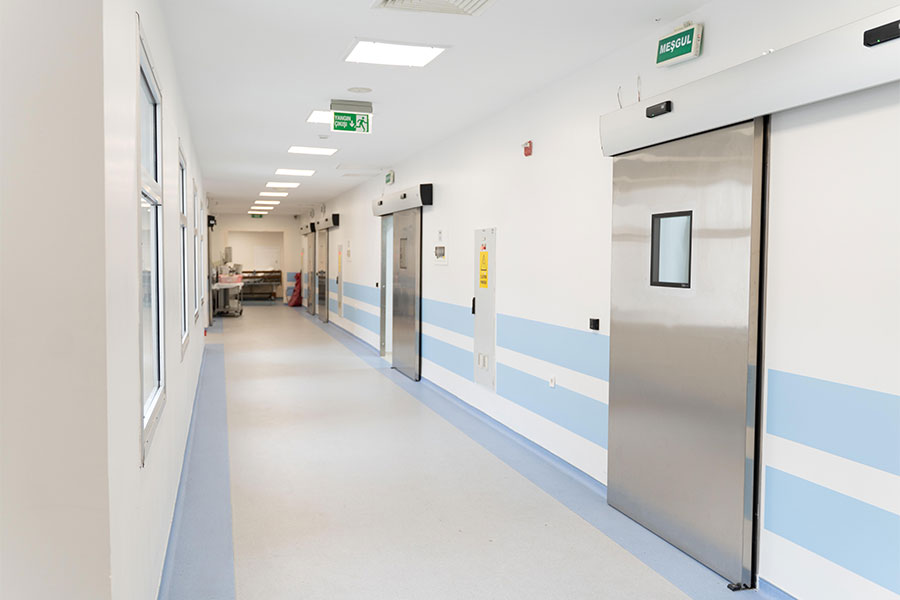
Cleanrooms are controlled environments used in fields requiring high precision, such as pharmaceutical manufacturing, biotechnology, electronics, medical device production, and healthcare facilities. One of the most critical components of these areas is cleanroom doors. The material structure, sealing capacity, pressure management, and installation quality of the door are directly related to the ISO class of the environment.

On this page, cleanroom doors are technically examined in terms of production technologies, application methods, and meeting high standards.


Table of Contents

  1. Material Technologies and Surface Properties
  2. Sealing and Pressure Management
  3. Production Technology in Cleanroom Doors
  4. Application Methods and Technical Importance of Correct Installation
  5. International Standards and Performance Requirements
  6. Integrated Systems and Contamination Management
  7. Conclusion

1. Material Technologies and Surface Properties

The materials used in cleanroom doors are decisive for hygiene and particle control. The surface structure of the door must be designed to minimize the risk of the contacting air carrying particles.

Antistatic and Non-Porous Surface Structures

The most commonly used surface technologies in cleanroom doors are:

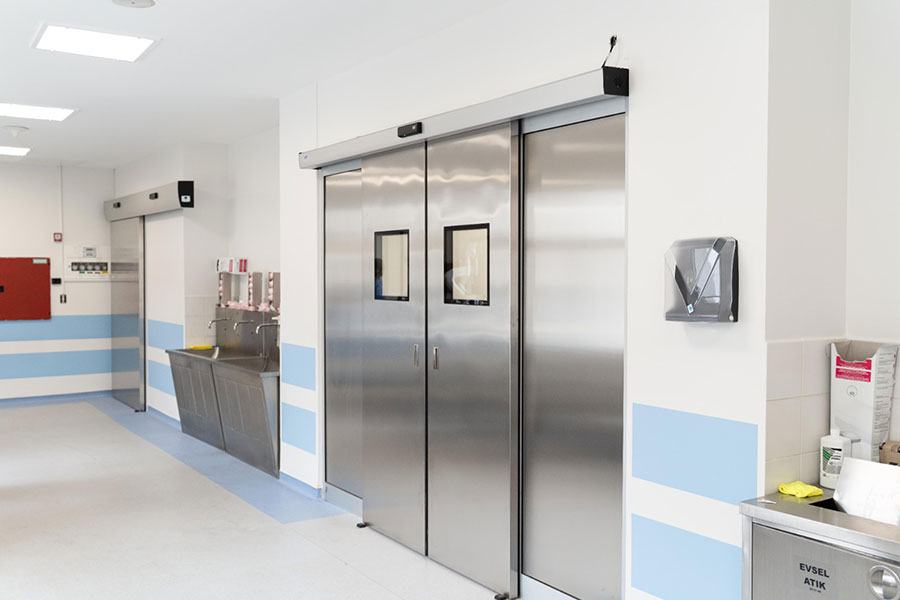
  • Stainless steel surfaces: Provides chemical resistance and sterilization compatibility.
  • Antistatic surface coatings: Reduces particle attraction by preventing electrostatic charge buildup.
  • Non-porous HPL or antibacterial laminate: Easy-to-clean, particle-free structure.

These are fundamental material criteria for meeting ISO 14644 requirements.

Door Leaf Core Material

The internal filling material affects the stability and acoustic performance of the door:

  • Aluminum honeycomb core: Provides a balance of low weight and high rigidity.
  • Polyurethane-filled panel: Offers high thermal insulation.

The door's resistance to deformation is a key indicator of production quality.

Back to top


2. Sealing and Pressure Management

In cleanrooms, air pressure is controlled as either positive or negative. The sealing of the door plays a critical role in maintaining the ISO class of the environment.

Pressure-Compatible Door Design

Cleanroom doors must meet the following conditions:

  • Perimetric gasketing: Ensures a complete seal at the door frame–leaf junction.
  • Automatic pressure mechanism (Drop seals): Ensures that gaskets sit with optimum compression force when the door closes.
  • Air leakage control classes: Based on EN 12207 performance classes.

These features ensure that the particle density of the environment remains stable.

Airflow Management

The cleanroom door must operate in harmony with the HVAC system. To prevent pressure loss:

  • Locking and automation scenarios must be adjusted according to airflow.
  • Door closing speeds should be programmed to minimize pressure fluctuations.

Back to top


3. Production Technology in Cleanroom Doors

The production process is one of the most important stages determining the performance of a cleanroom door. Quality control tests applied during production establish the door's long-term durability.

High-Precision Processing Techniques Used in Production

  • CNC-based cutting and bending: Ensures millimetric tolerances.
  • Robotic surface coating systems: Creates a homogeneous surface.
  • Heat and pressure simulation tests: Measures the risk of door deformation.

Mandatory Quality Control Steps in Production

  • Air tightness test – Validates ISO class requirements.
  • Pressure resistance test – Measures the door's stability against positive/negative pressure.
  • Mechanical torsion test – Evaluates leaf rigidity.

These tests determine whether the door is suitable for cleanroom operations.

Back to top


4. Application Methods and Technical Importance of Correct Installation

High performance in cleanroom doors depends not only on product quality but also on installation accuracy. Without professional installation, even the highest quality product cannot meet ISO class requirements.

Critical Points in Installation

  • Frame–wall integration: Millimetric gaps must be eliminated.
  • Air barrier tests: Pressure loss must be measured after installation.
  • Automation and sensor calibration: Must be adjusted according to the area's pressure values.

Cleanroom Transition Scenarios

The following scenarios must be considered during door installation:

  • Airlock transitions
  • Interlock scenarios between two doors
  • Regional pressure differentials

Back to top


5. International Standards and Performance Requirements

The performance of cleanroom doors must be verified by international standards. The most critical norms are as follows:

  • ISO 14644 – Cleanroom classes
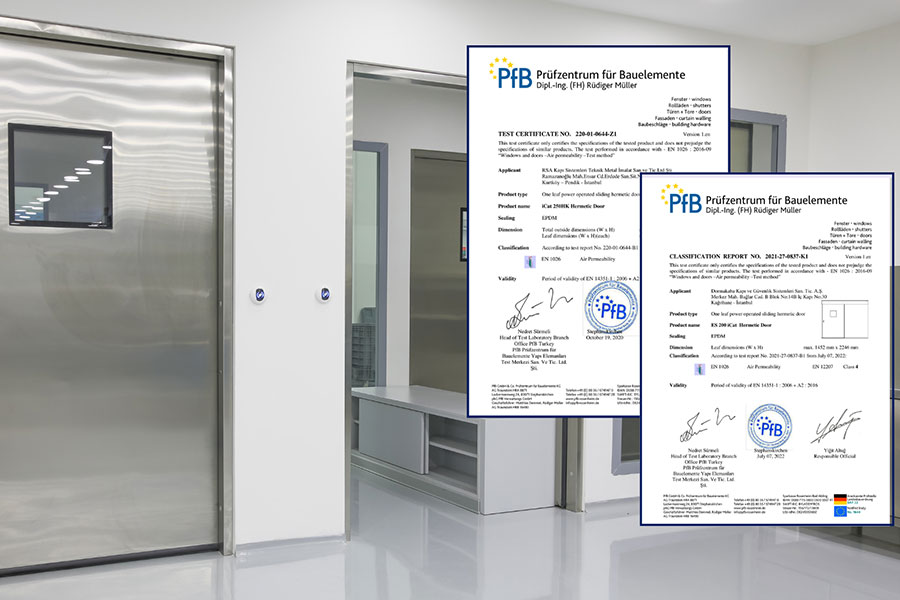
  • EN 12207 – Classification of air permeability
  • EN 16361 – Power operated pedestrian doors – Product standard
  • GMP requirements – For pharmaceutical production processes

Compliance with these standards supports operational continuity.

Back to top


6. Integrated Systems and Contamination Management

In cleanrooms, doors are not standalone products; they are part of an integrated engineering system that works with HVAC systems, air curtains, interlock solutions, and pressure management.

Interlock Systems

Interlock mechanisms prevent two doors from opening at the same time, maintaining pressure stability. These systems:

  • Reduce contamination risk,
  • Manage airflow,
  • Optimize personnel transition.

HVAC Synchronization

Door closing speeds must be compatible with HVAC air flow rates and pressure levels. Therefore, it is essential for the automation system to operate in integration with the HVAC.

Back to top


Conclusion

Cleanroom doors are among the critical performance components in production and healthcare facilities requiring high precision. The surface technology, sealing capacity, production tolerances, and professional installation applications of the door directly determine the sustainability of cleanroom standards.

Cleanroom doors produced with correct engineering and applied correctly are one of the most important building blocks of a facility in terms of operational efficiency and contamination control.

Back to top